

Closing a company in the UAE is often more complex than business owners expect. Many assume that once trading stops or a trade licence expires, the company is automatically closed. In reality, an inactive company may still have ongoing compliance obligations, tax registrations, employee records, bank accounts, and regulatory responsibilities that require formal closure. Failure to complete the proper process can result in penalties, administrative complications, and future business restrictions.
The Company Liquidation Process in UAE is the formal procedure through which a business settles its obligations, obtains required clearances, and cancels its licence with the relevant authority. Whether you operate a mainland company, a free zone entity, or a dormant business that has stopped trading, a structured liquidation process helps ensure a compliant and orderly exit.
At Exactitude Business Services, we support business owners through the liquidation process by helping them understand requirements, organise documentation, coordinate liquidation audits, address accounting and tax matters, and work towards a smooth company closure.
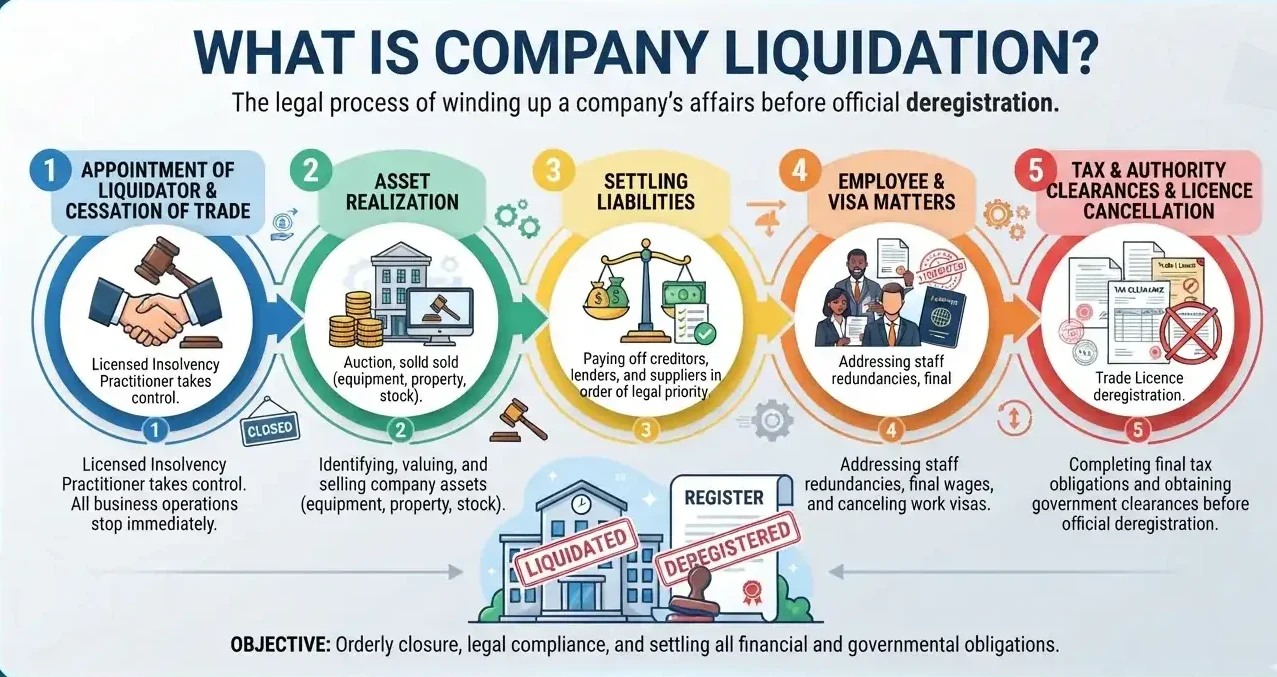
What Is Company Liquidation?
Company liquidation is the legal process of winding up a company’s affairs before it is officially deregistered. During this process, the business settles liabilities, addresses employee and visa matters, completes tax obligations, obtains authority clearances, and cancels its trade licence.
Depending on the company structure and licensing authority, liquidation may involve:
- Shareholder resolutions
- Appointment of a liquidator
- Liquidation audit and financial review
- Employee and visa cancellations
- VAT and Corporate Tax deregistration
- Bank account closure
- Authority clearances
- Final licence cancellation
The exact requirements vary between mainland and free zone jurisdictions, but the objective remains the same: closing the business correctly and reducing future compliance risks.
Why Do Businesses Need Liquidation Services?
Businesses close for many different reasons.
Some companies complete their commercial objectives, while others decide to restructure, relocate operations, reduce costs, or exit a particular market.
Common reasons include:
- Business Is No Longer Trading: The company has become inactive but remains legally registered.
- Ongoing Renewal Costs: Licence renewals, office requirements, compliance obligations, and authority fees continue even when the business is no longer operating.
- Shareholder Exit: Business partners decide to dissolve the company and move on to other ventures.
- Business Restructuring: Owners choose to establish a new entity or move operations to another jurisdiction.
- Dormant Companies: The company has not generated activity for a prolonged period but remains active on government records.
In these situations, formal liquidation helps ensure that obligations are properly addressed before closure.
The Real Challenges Business Owners Face
Many business owners approach liquidation assuming it is simply a licence cancellation exercise.
In practice, delays often occur because of:
- Unresolved accounting records
- Outstanding tax obligations
- Active employee visas
- Open bank accounts
- Missing company documentation
- Incomplete shareholder records
- Authority clearance requirements
- Liquidation audit requests
The longer these issues remain unresolved, the more difficult and expensive the closure process can become.
Company Liquidation Process in UAE: Step-by-Step
While every case is different, most UAE company liquidations follow a similar structure.
1. Initial Assessment and Review
Before starting the liquidation process, review the company’s current position.
This typically includes:
- Licence status
- Shareholder structure
- Financial records
- Outstanding liabilities
- Tax registrations
- Employee and visa status
- Bank accounts
- Authority requirements
This review helps identify potential compliance risks before the liquidation begins.
2. Shareholder Resolution
The shareholders formally approve the company’s closure and initiate the liquidation process.
Depending on the legal structure and jurisdiction, resolutions may require notarisation and supporting documentation.
3. Appointment of Liquidator
Many UAE company structures require a licensed liquidator to oversee the process.
The liquidator reviews the company’s financial position, coordinates required notices, and prepares documentation required for deregistration.
4. Creditor Notice Period
Mainland companies generally require a creditor notification period before final closure.
This stage allows creditors to present claims before the company is dissolved. Notice periods and publication requirements vary depending on the authority involved.
5. Financial Review and Liquidation Audit
A liquidation audit may be required depending on the company type and licensing authority.
The review may include:
- Assets and liabilities
- Bank balances
- Receivables and payables
- Shareholder balances
- Financial statements
- Outstanding obligations
The purpose is to demonstrate the company’s financial position before cancellation.
6. Employee and Visa Clearance
Employee obligations must be addressed before closure.
This may involve:
- End-of-service settlements
- Labour-related clearances
- Visa cancellations
- Establishment card closure
Failure to complete these requirements can delay the cancellation process.
7. Tax Deregistration
Companies registered for VAT or Corporate Tax may need to complete deregistration procedures before final closure.
This can include:
- Filing final tax returns
- Settling outstanding liabilities
- Applying for deregistration
- Obtaining deregistration confirmations
Tax compliance should be planned early in the liquidation process rather than left until the final stage.
8. Bank Account Closure
Business bank accounts generally need to be closed before the company can complete its deregistration process.
Many authorities request evidence that company banking arrangements have been formally terminated.
9. Final Licence Cancellation
Once all obligations, clearances, and reporting requirements have been completed, the authority issues the final cancellation confirmation and the company is officially closed.
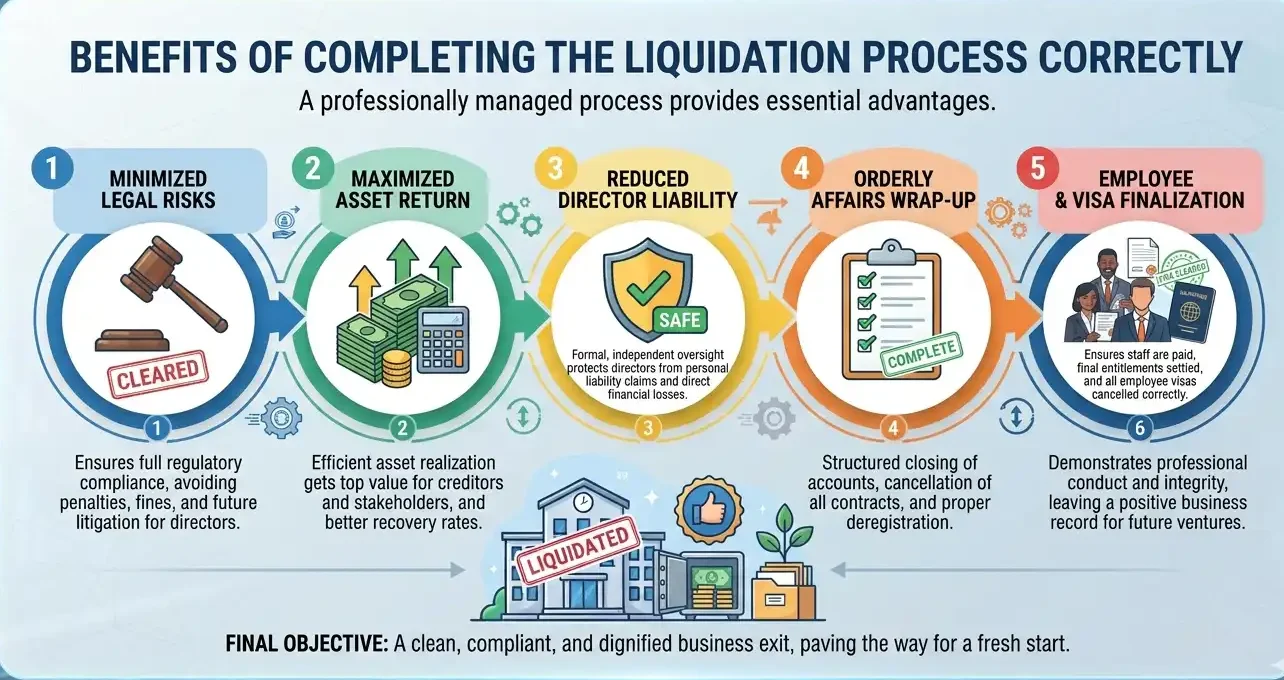
Benefits of Completing the Liquidation Process Correctly
A professionally managed liquidation process can provide several important benefits.
- Avoid Future Penalties: Reduce the risk of fines, unresolved compliance issues, and future authority concerns.
- Protect Shareholders: Ensure business obligations are properly addressed before closure.
- Support Tax Compliance: Address VAT and Corporate Tax obligations in a structured manner.
- Preserve Business Reputation: Maintain a clean compliance history for future ventures.
- Reduce Closure Delays: Early identification of risks helps avoid unnecessary complications later in the process.
Why Liquidation Audits Matter
One of the most common reasons company closures are delayed is insufficient financial documentation.
A liquidation audit helps provide clarity regarding:
- Assets
- Liabilities
- Shareholder balances
- Outstanding obligations
- Financial records
- Closure readiness
For many authorities, the liquidation audit forms an important part of the closure package and helps support the deregistration process.
The Exactitude Experience
At Exactitude Business Services, we understand that closing a company is often a significant business decision.
Our role is to help business owners understand the requirements, prepare documentation, address compliance considerations, and navigate the liquidation process with greater confidence.
We assist clients by:
- Reviewing closure readiness
- Supporting liquidation audit preparation
- Organising financial documentation
- Identifying compliance gaps
- Assisting with tax-related requirements
- Coordinating authority requirements
- Supporting the company closure process from start to finish
Whether you operate a mainland company, an IFZA company, a Meydan Free Zone business, a RAKEZ entity, a SHAMS company, or another UAE-registered organisation, our objective is to help make the closure process more organised, transparent, and efficient.
Why Choose Exactitude Business Services?
- UAE business compliance experience
- Support for mainland and free zone companies
- Accounting, tax, audit, and business advisory expertise
- Practical guidance tailored to your business structure
- Clear communication throughout the process
- Focus on compliance and risk reduction
Frequently Asked Questions
How long does the Company Liquidation Process in UAE take?
The timeline depends on the company structure, licensing authority, liquidation requirements, and clearance process. Straightforward cases may be completed within a few months, while more complex matters can take longer.
Can I simply stop renewing my trade licence?
No. Allowing a licence to expire does not automatically close the company. Formal closure procedures are generally required to complete deregistration correctly.
Is a liquidation audit required?
Many mainland and free zone authorities require a liquidation audit or financial report before approving company closure. Requirements vary depending on the jurisdiction.
What happens to VAT and Corporate Tax registrations?
Where applicable, businesses may need to file final returns, settle liabilities, and complete deregistration procedures before the company can be fully closed.
Can a dormant company be liquidated?
Yes. Dormant companies can generally be liquidated, although the exact requirements depend on the authority, company structure, and compliance status.
Why should I seek professional support before starting liquidation?
Early planning can help identify potential risks, missing documentation, unresolved tax matters, and compliance gaps before they cause delays in the closure process.
Planning a Company Closure in the UAE?
If your company has stopped trading, requires a liquidation audit, or needs support with the company liquidation process in the UAE, Exactitude Business Services can help you evaluate your options and prepare for a compliant business closure.